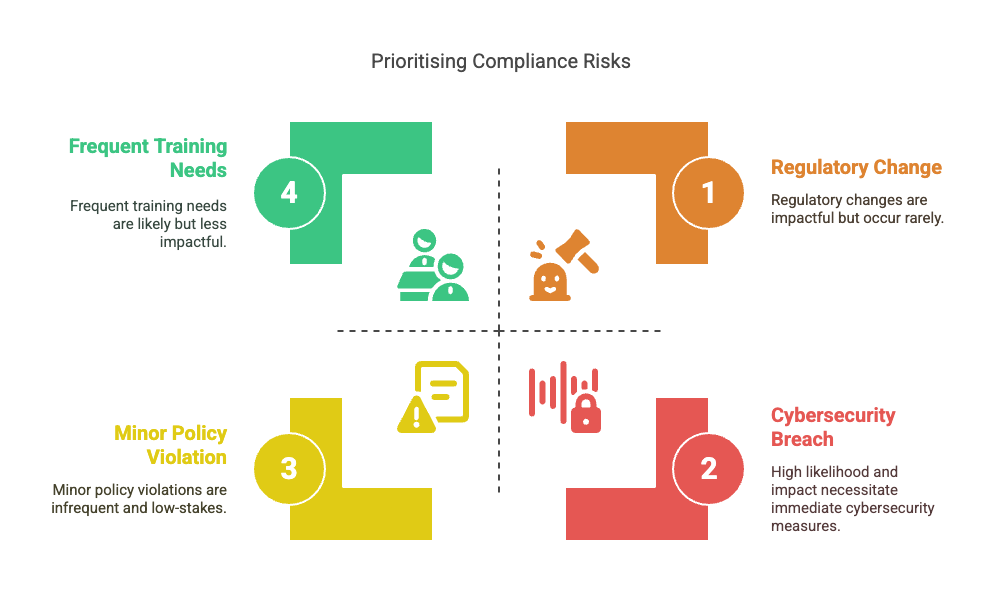

In today's fast-evolving digital landscape, compliance isn't just about checking off a list of requirements—it's about smart, strategic risk management. Many security regulations and industry standards emphasise a risk-based approach, requiring organisations to identify, assess, and mitigate threats proactively. But what does that really mean for your business?
What Is Risk Management?
Risk is everywhere. Whether investing in stocks or safeguarding digital assets, we constantly make risk-based decisions. Businesses must take a similar approach—only in a structured, formalised manner.
At its core, risk management involves:
• Identifying potential threats that could jeopardise business objectives.
• Assessing the likelihood and impact of these threats.
• Implementing controls to prevent, mitigate, or accept risks.
Importantly, risk is inevitable—eliminating it entirely isn't realistic. Instead, the goal is to ensure management is fully aware of critical risks and makes well-informed decisions on handling them. A proactive risk management strategy strengthens resilience, security, and compliance.
How a Risk-Based Approach Enhances Compliance
Security frameworks (such as ISO 27001, SOC 2, NIST, and GDPR) provide organisations with guidelines to protect information. However, compliance isn't a one-size-fits-all checklist.
A risk-based approach means:
• You prioritise security measures based on actual threats to your business.
• You allocate resources effectively, focusing on high-risk areas first.
• You ensure compliance efforts are aligned with business goals.
Instead of blindly following regulatory requirements, companies can tailor their security measures based on risk levels, industry, and operational needs.
Best Practices for Implementing a Risk-Based Compliance Strategy
1️⃣ Identify & Categorise Risks
• Conduct a risk assessment to determine which threats pose the highest impact.
• Classify risks into categories such as financial, operational, cybersecurity, and reputational.
2️⃣ Prioritise Security Controls
• Not all risks require the same level of attention. Use a risk matrix to assess likelihood vs. impact.
• Allocate budgets and manpower toward high-priority risks.
3️⃣ Balance Cost & Risk Reduction
• If mitigation costs exceed the potential damage, consider risk acceptance.
• Implement alternative security measures when appropriate.
4️⃣ Ensure Continuous Risk Monitoring
• Risk isn't static—it evolves. Regularly review and update your risk management strategy.
• Use automated security tools to detect vulnerabilities in real time.
5️⃣ Document Your Risk Decisions
• Maintain thorough documentation to support compliance efforts.
• Be prepared for audit reviews and regulatory scrutiny.
A risk-based approach to compliance isn't just about meeting regulations—it's about making compliance work for your organisation.
Final Takeaway


Final Takeaway
By applying risk intelligence, companies can protect their data, optimise resources, and maintain a competitive advantage without unnecessary overhead.
Want expert guidance on risk-based compliance? Contact IntelliSecure today.