


In today's digital-first world, trust is everything. Businesses handle vast amounts of sensitive data daily, yet security breaches continue to make headlines. Customers, partners, and regulators want to know: Can they trust your systems?
This is where SOC 2 compliance comes in. Developed by the American Institute of Certified Public Accountants (AICPA), SOC 2 is a rigorous audit that evaluates how well an organisation protects customer data. While not a legal requirement, it has become a gold standard for businesses handling sensitive information.
If you're wondering whether SOC 2 compliance is right for your business, read on.
The Five Trust Principles of SOC 2
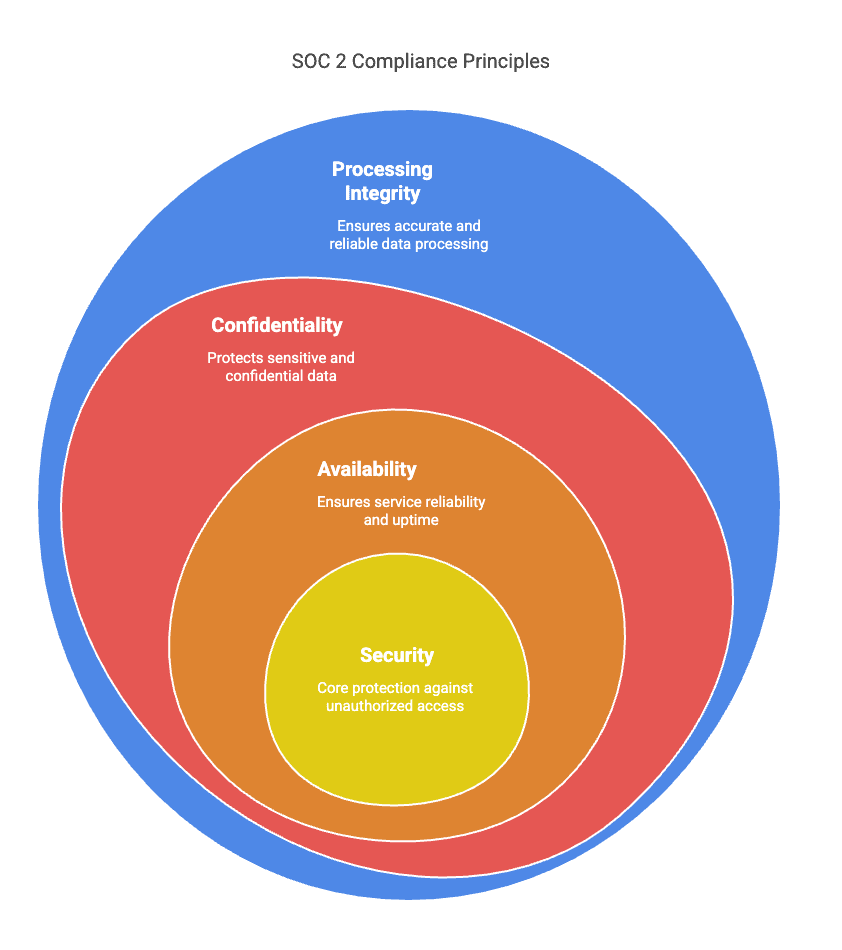
SOC 2 compliance is built around five Trust Services Criteria (TSC), which act as a benchmark for securing systems and protecting data.
1. Security (Required)
Are your systems protected against unauthorised access and breaches?
This is the core SOC 2 criterion, ensuring data security through risk assessment, access controls, and threat management. If you're pursuing SOC 2 compliance, security is non-negotiable.
Who needs it? Every organisation pursuing SOC 2 compliance.
2. Availability
Can your customers and stakeholders rely on your services being available when they need them?
This principle assesses uptime, disaster recovery, and infrastructure resilience to ensure business continuity.
Who needs it? Financial services, SaaS providers, and e-commerce businesses concerned about uptime and SLAs.
3. Confidentiality
Do you properly handle and protect sensitive data?
This applies to legal documents, business plans, financial records, and proprietary information that require strict confidentiality agreements.
Who needs it? Businesses managing highly confidential data, including legal firms, fintech companies, and health tech startups.


4. Processing Integrity
Are your systems processing data accurately, reliably, and free from errors?
This principle ensures data accuracy, consistency, and compliance with business processes.
Who needs it? Companies relying on automated transactions and real-time data processing, such as financial institutions and logistics companies.
5. Privacy
Does your business handle personal data in accordance with privacy laws and best practices?
This principle ensures compliance with GDPR, CCPA, and other privacy regulations to safeguard user information.
Who needs it? Any business collecting and storing personal data, such as healthcare providers, SaaS platforms, and online marketplaces.
SOC 2 compliance signals to the market that your organisation is serious about security and privacy—giving you an edge over non-compliant competitors.
Why SOC 2 Compliance Matters
Still unsure if SOC 2 compliance is worth it? Here are three compelling reasons why forward-thinking businesses invest in it:
1. Meet Customer & Partner Expectations
Clients and business partners increasingly demand SOC 2 compliance as proof that their data is safe. Without it, you may lose deals to competitors who have it.
2. Strengthen Security & Reduce Risk
A SOC 2 audit forces organisations to adopt better security controls, reducing the risk of data breaches, reputational damage, and legal liabilities.
3. Gain a Competitive Advantage
SOC 2 compliance signals to the market that your organisation is serious about security and privacy—giving you an edge over non-compliant competitors.
The SOC 2 Certification Process
Getting SOC 2 certified isn't an overnight process. It requires careful planning and execution. Here's a breakdown of the journey:
- Readiness Assessment – Evaluate your current security posture.
- Gap Analysis & Remediation – Address deficiencies and align with SOC 2 requirements.
- Evidence Collection – Gather documentation proving compliance.
- Audit by an Independent CPA – A certified auditor assesses your controls and issues a report.
- Continuous Monitoring – SOC 2 isn't a one-time event; it requires ongoing security improvements.
How Long Does It Take?
SOC 2 preparation can take several months, depending on the organisation's maturity and the scope of the audit. The certification is valid for one year, requiring annual reassessment.
SOC 1 vs. SOC 2 vs. SOC 3: What's the Difference?
SOC 1 – Focuses on financial reporting controls.
SOC 2 – Focuses on data security, availability, confidentiality, processing integrity, and privacy.
SOC 3 – A simplified SOC 2 report meant for public distribution.
Should You Pursue SOC 2 Compliance?
If you check any of the following boxes, SOC 2 compliance is worth considering:
You handle sensitive customer data.
You want to differentiate from competitors.
Clients or partners are requesting SOC 2 compliance.
You plan to scale and expand your market reach.
You want to strengthen cybersecurity and reduce risks.